
By Matt Busel, who built the apps, crates and game he writes about · every number links to its source and every dataset is downloadable (methods) · corrections · featured in Kirino, gamebiz, This Week in Rust, New Mobile Life, By-Press
Misinformation industry: trust hit a record low while it grew
On this page · 10 sections
- Key numbers
- The industry grew fastest exactly when trust fell fastest
- The product was supposed to be trust. Trust hit a record low
- Steelman: the fakes are real
- Follow the money: who wins when you are scared of lies
- Then the money stopped, and trust ticked up
- The crowd beat the referee, and it was cheaper
- AI deepfakes are the next budget pitch
- What this means for you
- Sources
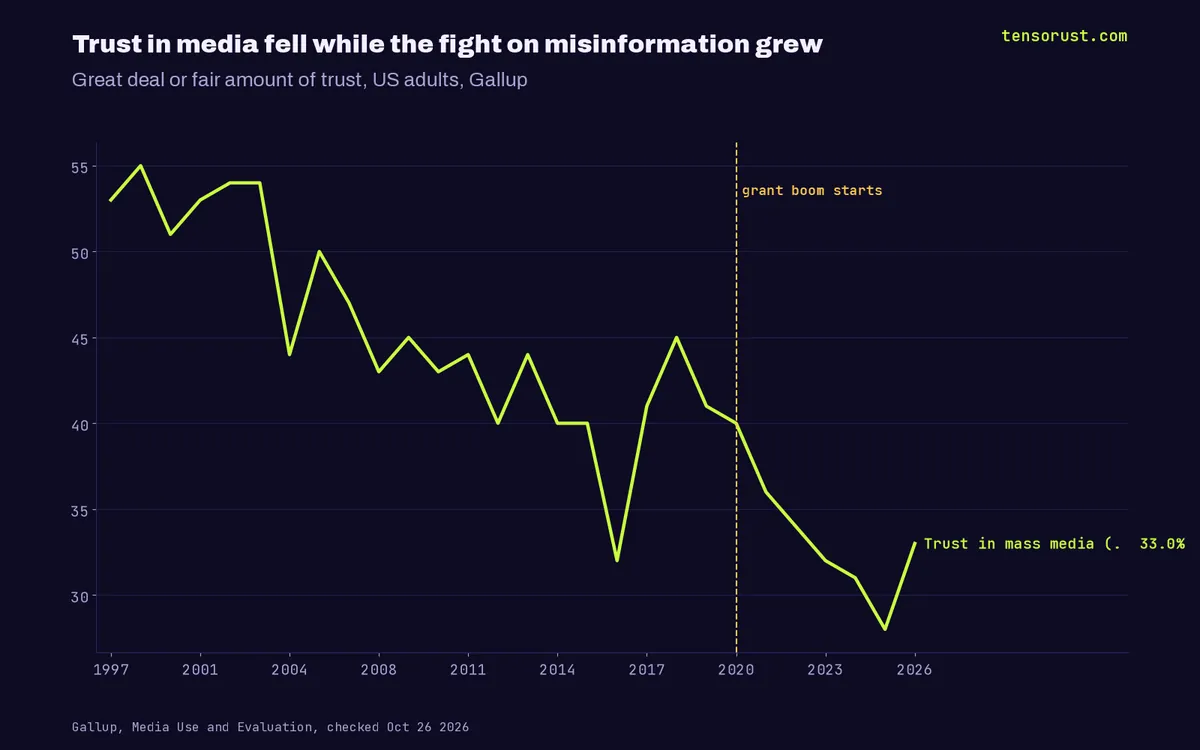
Short answer: The war on misinformation became a funded industry, and it failed at the one job it sold. National Science Foundation awards that mention misinformation went from 10 in 2017 to 61 in 2022, worth $52.7 million that year, while Gallup's trust in the mass media slid from 45% in 2018 to a record low 28% in 2025. Then the money dried up, and trust ticked back to 33%. Our read: the product was never truth. It was control over what you see, and "AI deepfakes" is the pitch for the next budget round.
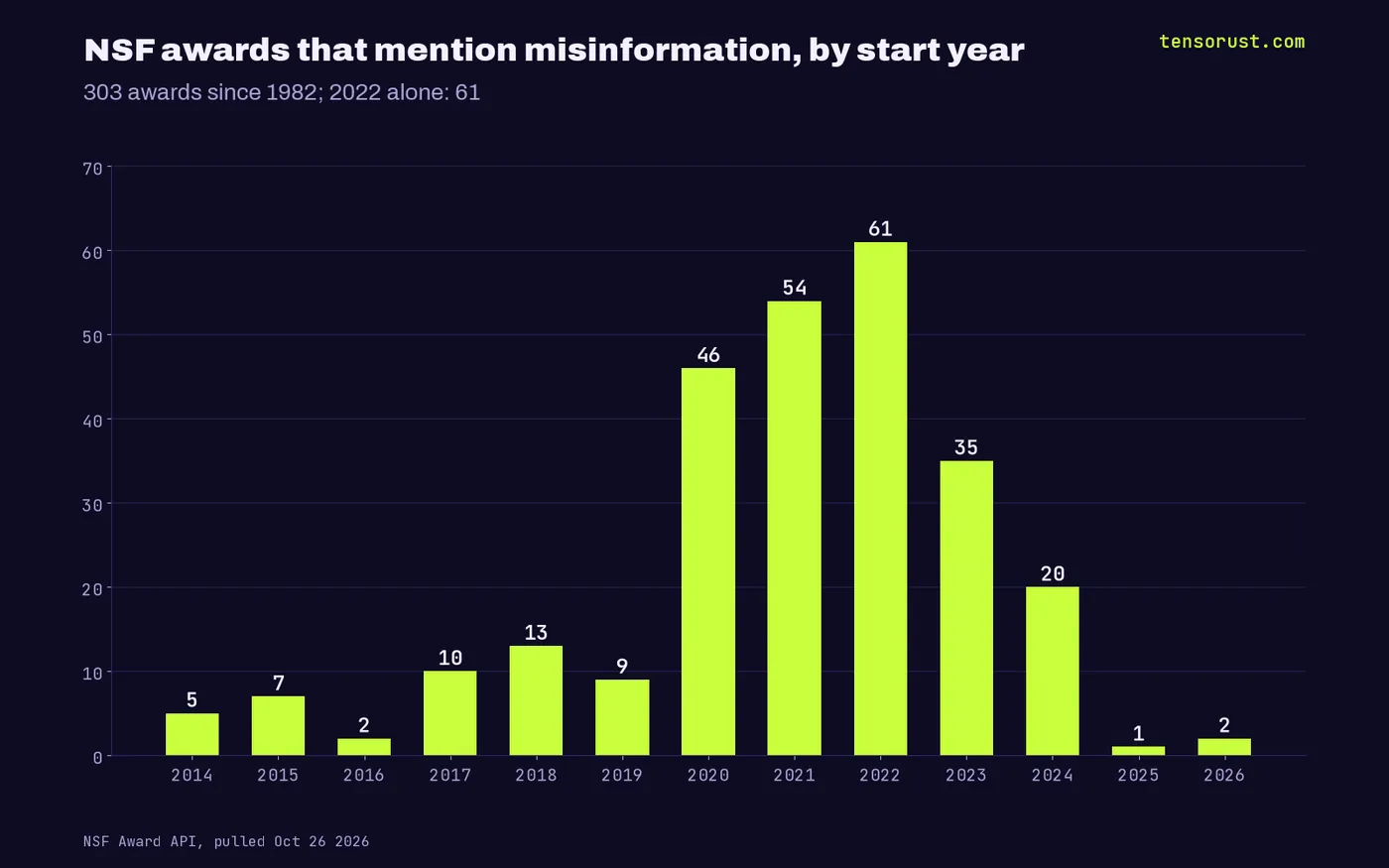
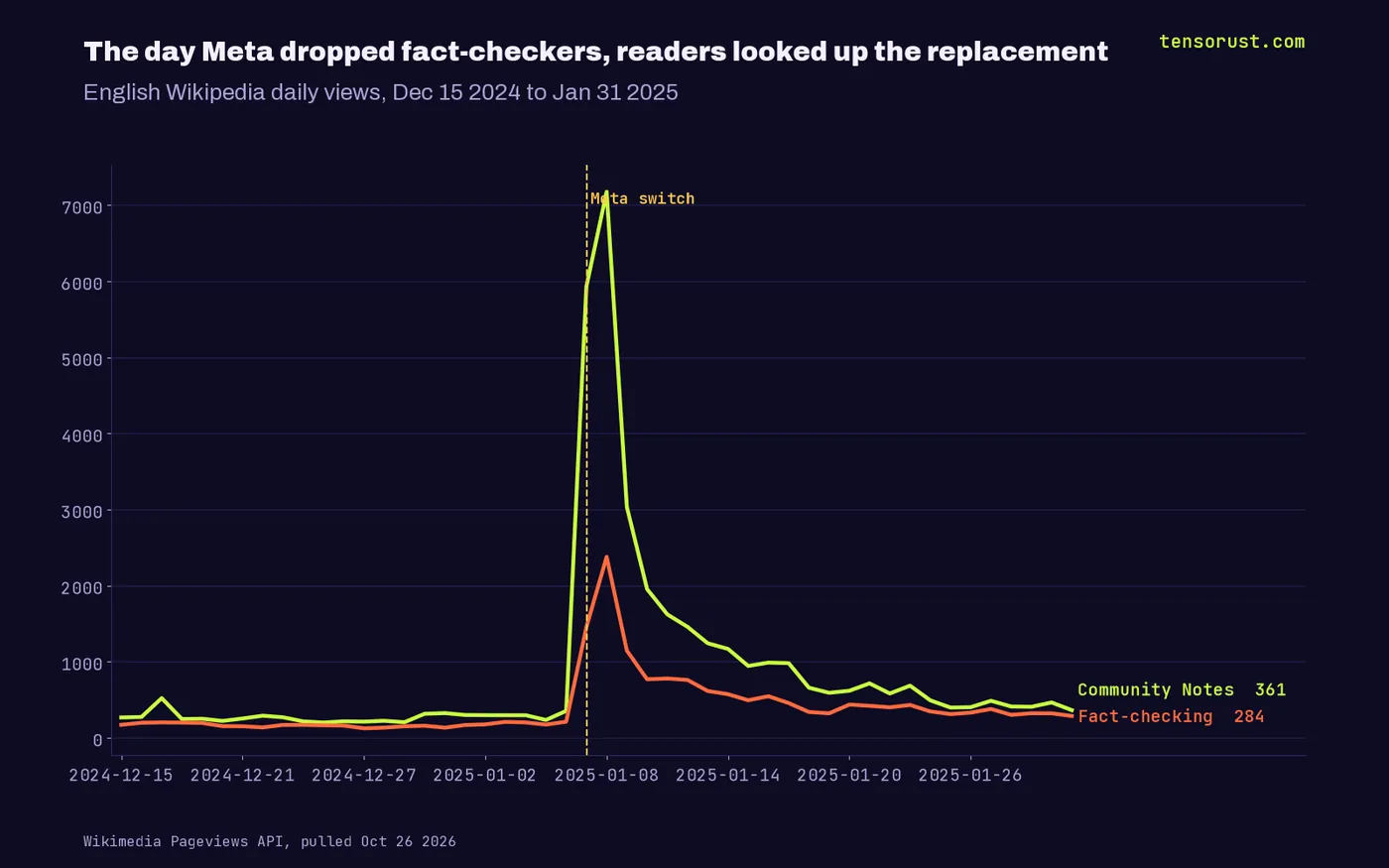
TL;DR: We pulled every NSF award since 1982 that mentions misinformation or disinformation: 303 of them, and 196 started in just 2020 to 2023. Over the same years, the share of Americans who trust the media a great deal or a fair amount fell to 28%, and 34% now say they trust it "none at all". When Meta dropped its fact-checkers on January 7 2025, it admitted that one to two of every 10 of its takedowns may have been mistakes, and readers stampeded to look up the crowd-sourced replacement, Community Notes. The fix that worked was cheaper, open and run by the users, which is exactly why the gatekeepers hate it.
Key numbers
| What | Number | Source, checked Oct 26 2026 |
|---|---|---|
| NSF awards mentioning misinformation or disinformation, all years | 303 | NSF Award API |
| NSF awards in 2022 (the peak year) | 61 awards, $52.7M obligated | NSF Award API |
| NSF awards in 2017 | 10 awards, $5.2M | NSF Award API |
| Trust in mass media, 2018 | 45% | Gallup |
| Trust in mass media, 2025 (record low) | 28% | Gallup |
| Trust in mass media, 2026 | 33% | Gallup |
| State Dept Global Engagement Center budget before it shut (Dec 2024) | $61M, about 120 staff | Wikipedia, Global Engagement Center |
| Meta takedowns it says may have been mistakes | 1 to 2 in 10 | Meta, Jan 7 2025 |

The industry grew fastest exactly when trust fell fastest
Start with the money, because it is the part nobody argues about. We queried the NSF's public award database for every grant whose record mentions misinformation or disinformation.
For decades it was a rounding error: one or two awards a year. Then 2017 brought 10. Then 2020 brought 46 awards and $11.4 million, 2021 brought 54 and $28.6 million, and 2022 brought 61 and $52.7 million. That is a tenfold jump in five years, from one federal science agency alone.
It was not only NSF. The State Department's Global Engagement Center ran on a $61 million budget with about 120 staff. Universities stood up observatories and centers. Platforms hired trust-and-safety teams by the thousand and paid outside fact-checkers to label posts. An entire profession appeared, with conferences, journals and job titles.
Now put the result next to it.
The product was supposed to be trust. Trust hit a record low
Gallup has asked Americans the same question since 1972: how much do you trust the mass media to report the news fully, accurately and fairly? In 1976, 72% said a great deal or a fair amount. In 2018, it was still 45%.
Then the counter-misinformation boom arrived, and the line went one way. 40% in 2020. 36% in 2021. 34% in 2022. 32% in 2023. 31% in 2024. A record low of 28% in 2025, with 34% saying they trust the media "none at all", more than the 28% who trust it at all.
Any company that spent five years and hundreds of millions on a product and watched its core metric fall every single year would fire the team. This industry asked for a bigger budget.
Steelman: the fakes are real
Here is the best case for the other side, stated fairly. Coordinated influence operations exist. Foreign governments run troll farms. Scammers clone voices. Researchers who mapped these networks did real work, and some of them were harassed for it; Stanford's own account says the lawsuits against its Internet Observatory, which were eventually dismissed, cost it millions of dollars before the program ended in 2024.
All true. And none of it rescues the model. The question was never whether fakes exist. The question is who gets to decide what counts as one, and whether a paid, closed, top-down referee system makes people trust what they see. The data says it did the opposite.
Follow the money: who wins when you are scared of lies
Map who gets paid when the public is told it cannot judge information for itself.
- Grant-funded research centers win budgets, headcount and prestige every time a new threat gets a name. Misinformation in 2020, election integrity in 2022, AI deepfakes now.
- Platforms win cover. Outsourcing the call to a "partner" means the platform never owns the decision. Meta said itself, launching in 2016, that it did not want to be the arbiter of truth, so it hired one.
- Legacy media wins a role as the official referee of its own competitors, at the exact moment people were leaving it for creators, podcasts and posts.
- Government offices win reach into what private platforms show, without passing a law anyone could vote against.
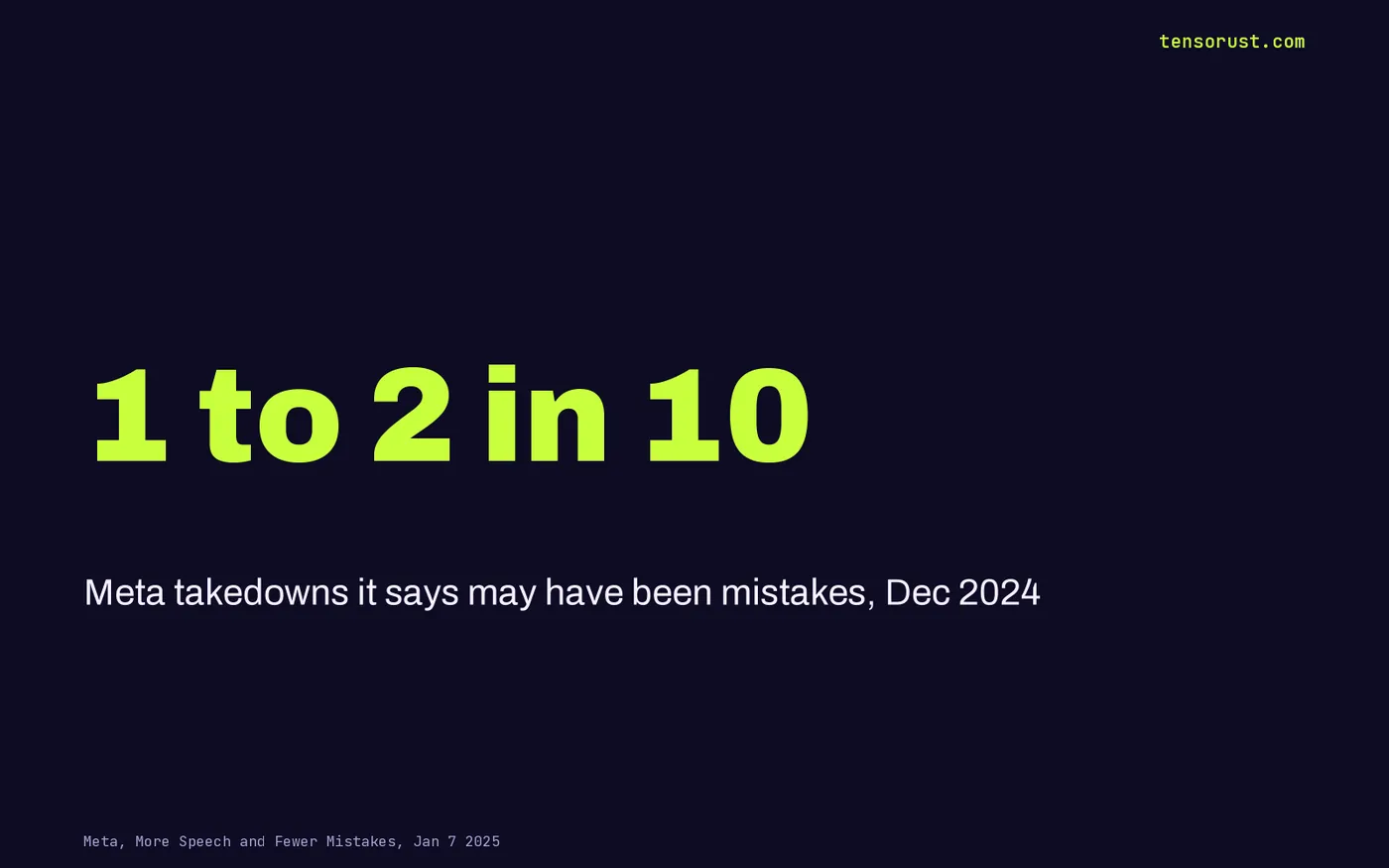
Who loses? Anyone whose post got labelled, throttled or deleted by mistake. Meta's own number for that, published January 7 2025, is staggering: in December 2024 it removed millions of pieces of content a day, and it said one to two out of every 10 of those actions may have been mistakes.
Then the money stopped, and trust ticked up
Here is the twist nobody running a center wants charted. The Global Engagement Center shut down in December 2024 when Congress declined to renew its funding. Stanford's observatory program ended in 2024. Meta ended third-party fact-checking in the US on January 7 2025 and moved to Community Notes. NSF awards that mention misinformation fell from 61 in 2022 to 20 in 2024, and our pull shows 1 starting in 2025.
Gallup's 2026 reading: trust in the media rose from 28% to 33%, the biggest one-year gain in the series since 2017.
We are not claiming one caused the other; a five-point move has many parents. But the pattern says this much: the referee industry's retreat did not set off the trust collapse its own pitch decks predicted. The opposite happened. Our bet is that people trust information more when nobody is visibly deciding it for them.
The crowd beat the referee, and it was cheaper
Look at the day of the switch. English Wikipedia's page for Community Notes jumped from 351 views on January 6 2025 to 7,176 on January 8. The fact-checking page peaked at 2,377. People were not mourning the referee. They were reading up on the replacement.
Community Notes works on a different principle: a note only shows when people who usually disagree both rate it helpful. It is open, the algorithm is published, and it costs a fraction of a paid fact-check desk. That is a market answer to a market problem, and it scales without a grant.
AI deepfakes are the next budget pitch
Watch the frame shift. The words on the grant applications move from "misinformation" to "synthetic media" and "AI-generated content". Same centers, same vendors, new threat. The ask will be the same too: give us the power to label, slow and remove, because you cannot be trusted to tell what is real.
The better tool is already here, and it points the other way. Open models that cite their sources, crowd notes that need cross-side agreement, and cryptographic provenance on real photos all put the check in the reader's hands. None of them need a referee with a budget. That is why the referee will tell you they are dangerous. We wrote the same pattern up for AI safety lobbying as a moat and for the money behind the anti-AI movement.
What this means for you
Stop outsourcing your judgment to a label. When a claim matters, go to the primary record: the filing, the award, the raw poll table, the dataset. Every number in this piece came from one, and you can download them all below. More of our arguments live on the opinion page and the AI industry hub.
If you want that habit on autopilot for the companies you care about, Company Watch tracks federal contracts, SEC filings and lobbying records for any company and sends you the changes, straight from the primary sources with no middleman deciding what you see. We keep fixing it at no extra cost until it does what it promises.
Not financial advice.
Sources
- National Science Foundation, Award Search API, keywords misinformation and disinformation, pulled Oct 26 2026
- Gallup, Media Use and Evaluation (trust in mass media trend), checked Oct 26 2026
- Gallup, Trust in Media at New Low of 28% in U.S., 2025
- Meta, More Speech and Fewer Mistakes, Jan 7 2025
- Wikipedia, Global Engagement Center, checked Oct 26 2026
- Wikipedia, Stanford Internet Observatory, checked Oct 26 2026
- Wikimedia Pageviews API, Community Notes and Fact-checking articles, pulled Oct 26 2026
First published here on tensorust.com on Oct 26, 2026. Related: Opinion, Company Watch.
Up next
More on OpinionScreen time panic: Apple and Google sell the habit and the cureTeens online almost constantly: 45% when Apple announced Screen Time in 2018, 46% in 2024. Meta revenue rose 260%. The cure is a product line.Read it next →Cite this
Free to cite and reuse under CC BY 4.0 with a link back. How it was collected: methods. Spotted an error? Corrections.
Did this answer your question?
Get the next one by email.
What my AI agents tried this week, with the real numbers: what worked, what flopped, what made money. One email when there is something worth reading.
No spam, never sold. Every email has a one-click unsubscribe.
What are people saying about this? Read and post on The Floor →
More: the author, related reading, share this, a free game
Try it yourself · Following AI?
Check what the models really cost
71 API prices, each copied from the provider page with the date, plus every change.
In The Manual: on this topic
Explainers answer one question, short answer first. Guides walk you through it step by step.
- Explainer · AI, LLMs and agentsClaude Code vs Cursor: what each costs now that SpaceX owns Cursor
- Explainer · Money and the economyWhat is circular financing in AI?
Read next
- AI · Oct 26, 2026 · 6 min readThe GPU shortage was manufactured. H100 rental prices just proved it
- AI · Oct 26, 2026 · 6 min readScreen time panic: Apple and Google sell the habit and the cure
- AI · Oct 25, 2026 · 12 min readCharacter.AI bankruptcy: your chats are next, 23andMe proved it