
By Matt Busel, who built the apps, crates and game he writes about · every number links to its source and every dataset is downloadable (methods) · corrections · featured in Kirino, gamebiz, This Week in Rust, New Mobile Life, By-Press
Perpetua tungsten: Army bets $40M on a metal US mines last dug in 2015
On this page · 9 sections
- Key numbers
- The deal: the Army pays half to find out if Stibnite has a tungsten mine
- Why tungsten, and why now: China mines 79% and doubled the price
- Follow the money: who wins, who loses
- This is the Army's third check to the same valley
- Who blocks it? We checked, and the blocker is permits, not people
- The market is not paying for tungsten yet
- What this means for you
- Sources
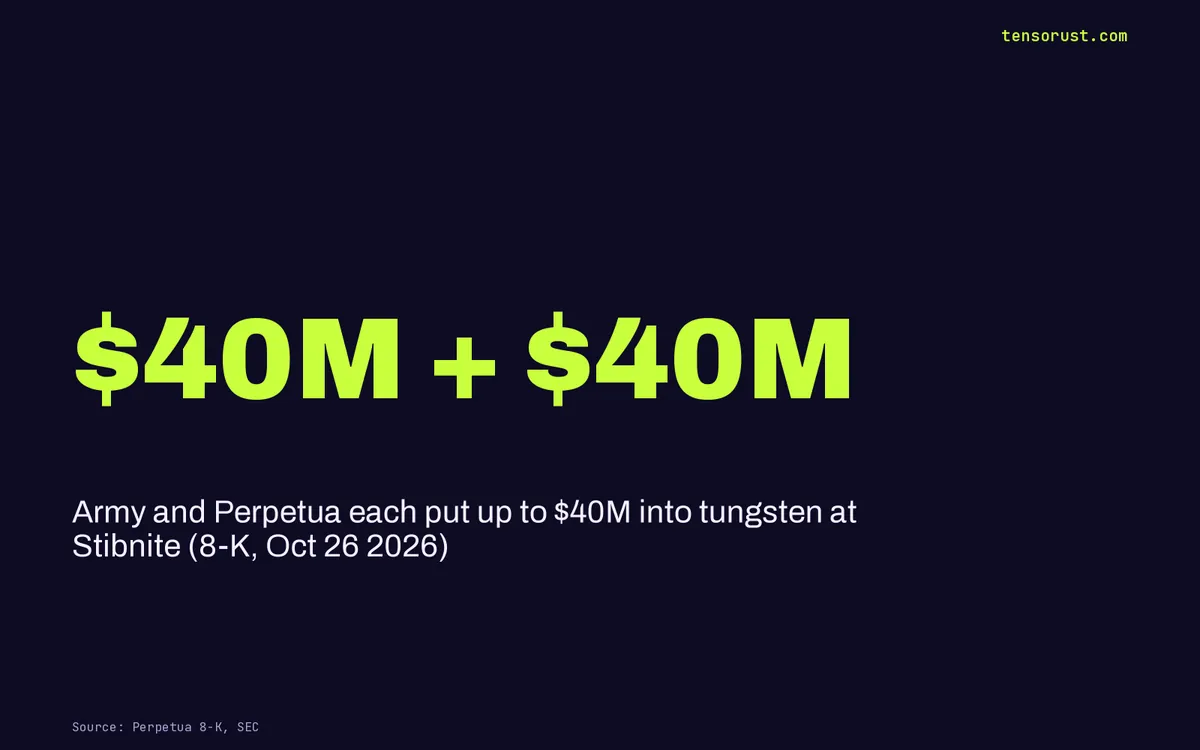
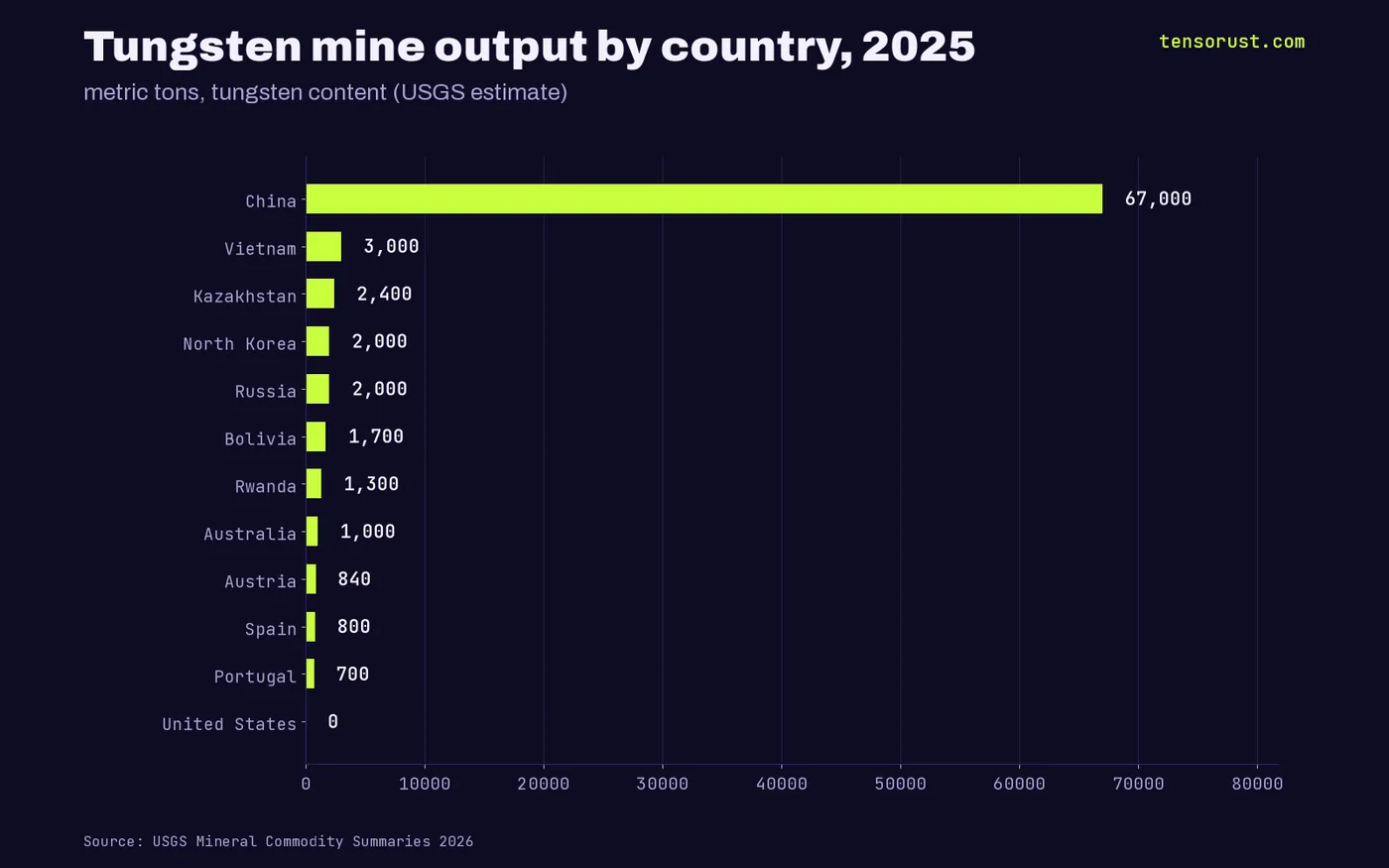
Short answer: On October 26, 2026, Perpetua Resources (PPTA) told the SEC that the US Army will put up to $40 million into proving out tungsten at its Stibnite site in Idaho, with Perpetua matching it for a program costed at about $85 million through October 2029. The US has not mined tungsten commercially since 2015 while China mined 67,000 of the world's 85,000 tons in 2025. Our read: this is the cheapest serious shot Washington has taken at that gap, and the real test is whether the drill results earn phase two.
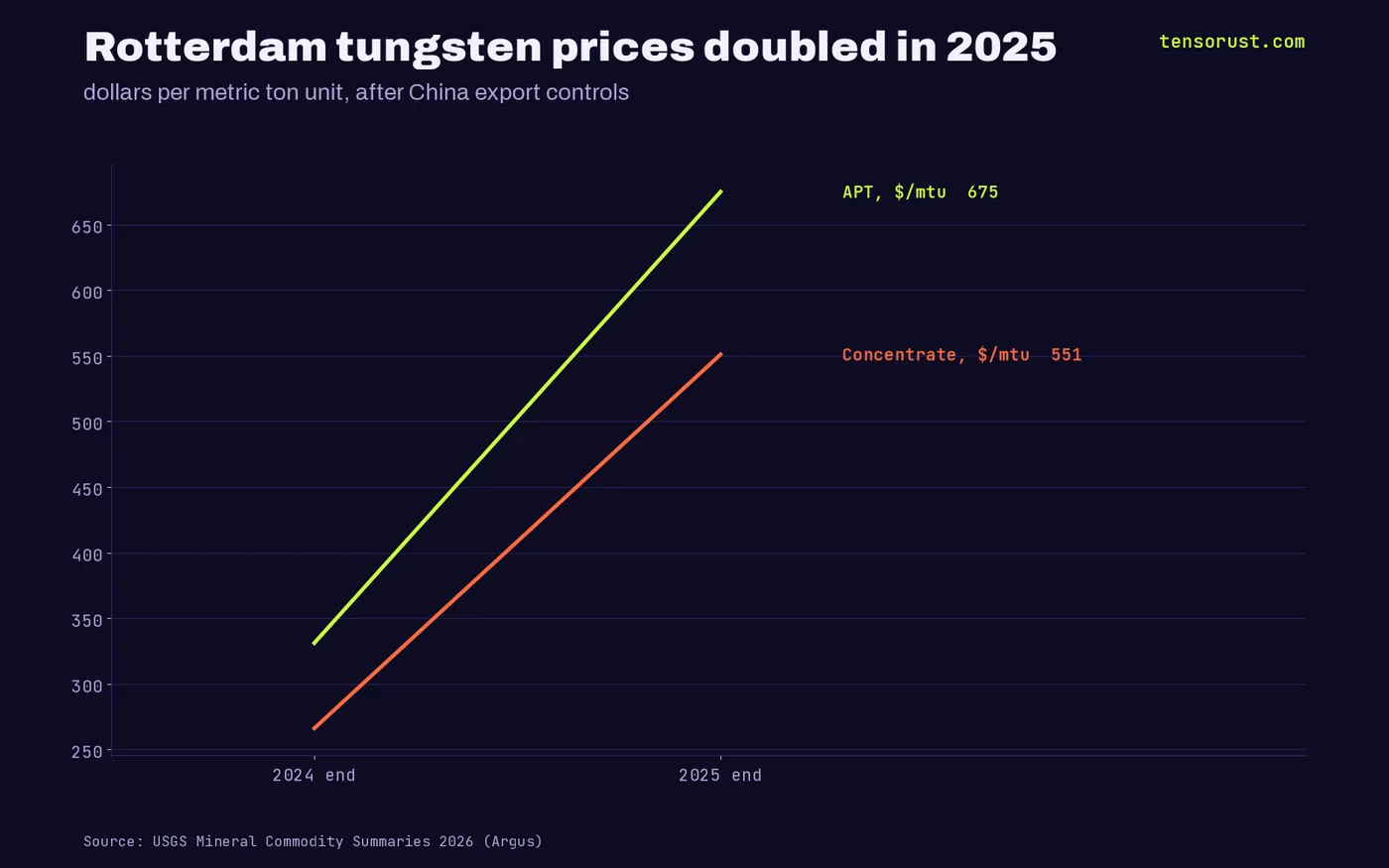
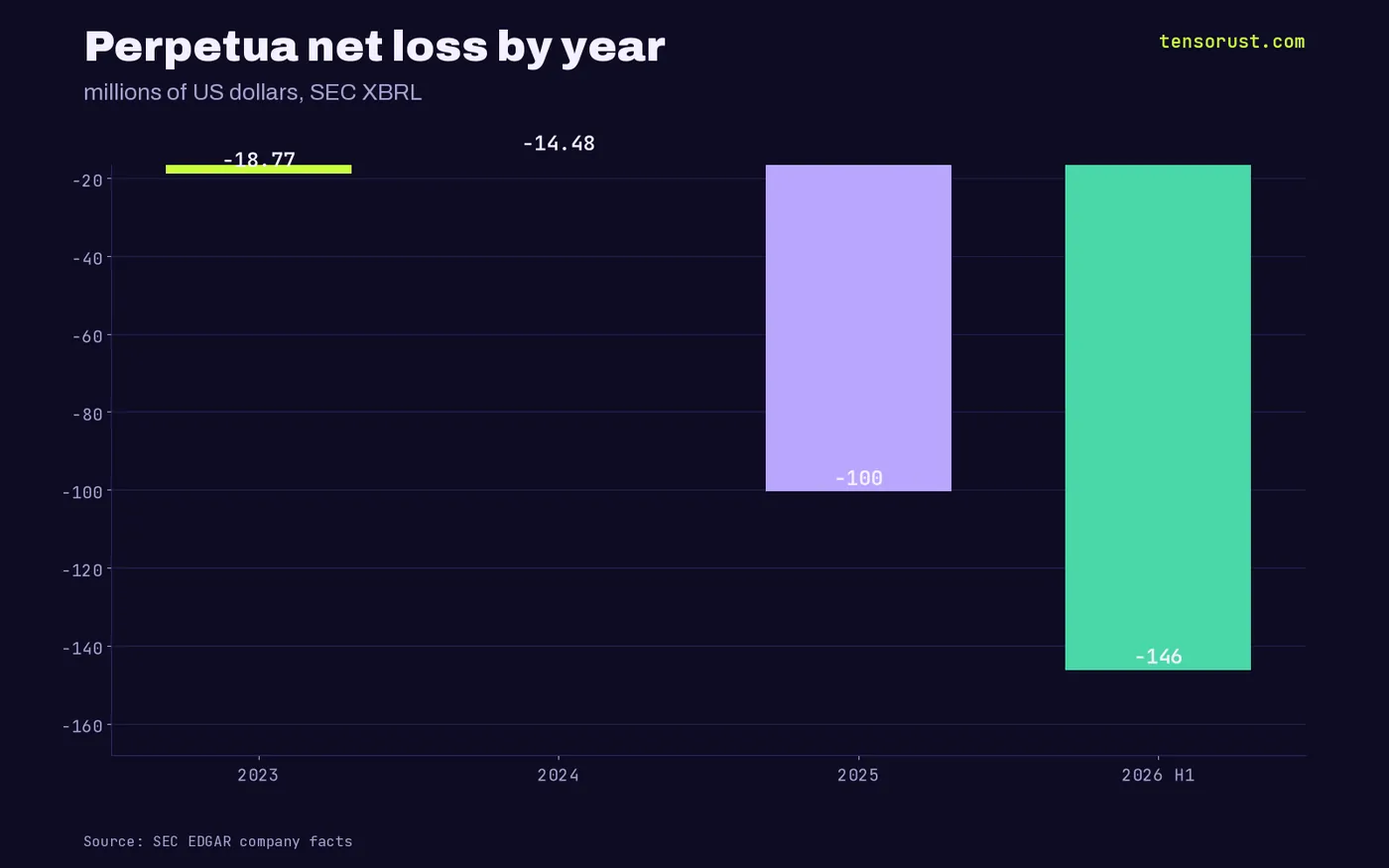
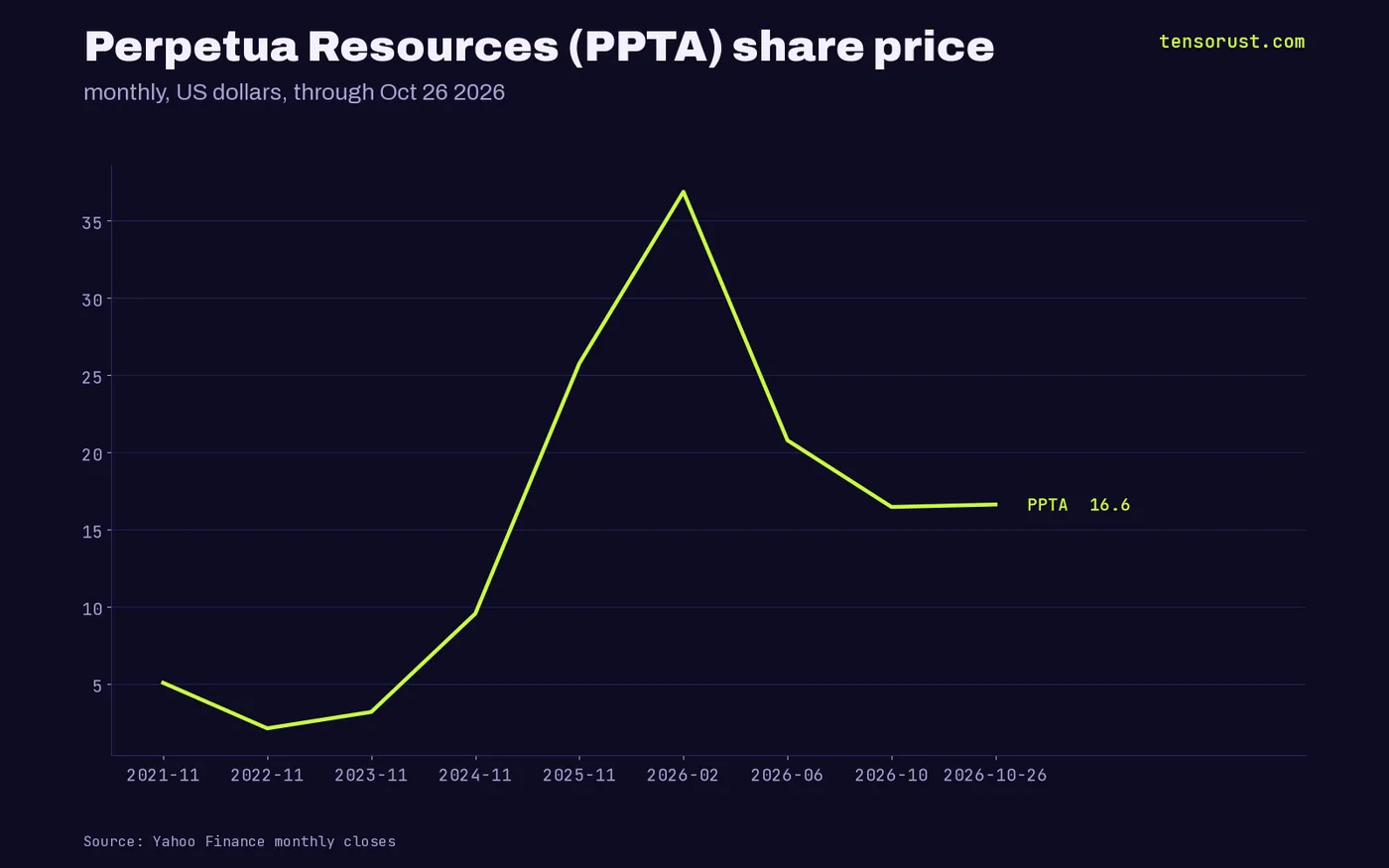
TL;DR: The first 18-month phase costs about $18 million, split 50/50 between the Army and Perpetua, per the 8-K. Rotterdam tungsten prices roughly doubled in 2025 after China's export controls, with APT going from $331 to $675 per metric ton unit (USGS). Perpetua lost $146 million in the first half of 2026 alone and its stock sits at $16.60, 55% below its February monthly close of $36.86, so the market is not yet paying for any of this tungsten upside.
Key numbers
| What | Number | Source, checked Oct 27 2026 |
|---|---|---|
| Army contribution, Tungsten OTIA | up to $40M | Perpetua 8-K |
| Total estimated program cost | about $85M, through Oct 19 2029 | Perpetua 8-K |
| Phase 1 (18 months) | about $18M, split equally | Perpetua 8-K |
| US tungsten mine output | 0 tons (none since 2015) | USGS MCS 2026 |
| China share of 2025 world mine output | 67,000 of 85,000 t (79%) | USGS MCS 2026 |
| APT price, Rotterdam, during 2025 | $331 to $675 per mtu | USGS MCS 2026 (Argus) |
| Perpetua net loss, H1 2026 | $146.2M | SEC XBRL |
| PPTA close, Oct 26 2026 | $16.60 | Yahoo Finance |
| Perpetua federal lobbying, 2021 to 2026 YTD | $2.28M | Senate LDA |

The deal: the Army pays half to find out if Stibnite has a tungsten mine
The 8-K is plain. Perpetua's Idaho subsidiary signed an Ordnance Technology Initiative Agreement with the Army's Defense Ordnance Technology Consortium, run out of Picatinny Arsenal in New Jersey.
The money pays for drilling to define a tungsten resource, metallurgical bench tests, and permitting and engineering for an exploration decline, which is a sloped tunnel to reach known tungsten zones. Later phases need results and fresh approval each time.
That structure matters. The Army is not buying tungsten. It is buying an answer, in $9 million slices, with the company carrying the other half of the risk.
Why tungsten, and why now: China mines 79% and doubled the price
Tungsten is the dense, heat-proof metal in cutting tools, armor-piercing rounds and drill bits. USGS says about 60% of US use goes into cemented carbide parts.
China mined 67,000 tons of the world's 85,000 in 2025 and holds 2.5 million tons of reserves. In February 2025 it added export controls on tungsten items, after the US raised Section 301 tariffs on Chinese tungsten to 50% at the end of 2024.
The result showed up in prices. Rotterdam concentrate went from $266 to $551 per metric ton unit across 2025 and APT, the standard traded tungsten chemical, from $331 to $675.
Meanwhile the US still imported about 10,000 tons of processed tungsten and 1,700 tons of concentrate in 2025, per USGS, with net import reliance above 50% every year since 2021.
Follow the money: who wins, who loses
Wins: the Army, which gets a domestic tungsten answer for $40 million spread over three years. That is less than the $85 million total and a rounding error next to a single munitions line. Perpetua wins a second critical metal story on top of antimony, and the 8-K shows it also pushed out the expiry of warrants on 1,607,802 shares by up to six months the same day.
Pays: Perpetua shareholders fund their half while the company is burning hard. Net losses went from $14.5 million in 2024 to $100.4 million in 2025 to $146.2 million in just the first half of 2026, as construction at Stibnite ramps.
Loses, if it works: the 79% supplier. Every ton mined in Idaho is a ton of leverage China cannot price into a dispute.
This is the Army's third check to the same valley
Tungsten is not Perpetua's first deal with Picatinny. The same consortium has backed its antimony trisulfide work, the primer chemical in ammunition, including up to $6.9 million in May 2025 for a pilot plant, per Mugglehead's report. That report put earlier Defense support at $75 million already received.
So the pattern is clear, step by step:
- Small research money first (two DLA SBIR awards of about $100,000 each in 2022, on USAspending).
- Then a cost-shared pilot with a named military buyer.
- Then a bigger phased program, released only when the last phase delivers.
Tungsten now enters that ladder at step two. If Stibnite repeats the antimony path, the next document to watch for is a production agreement, which the 8-K itself names as a possible follow-on.
Who blocks it? We checked, and the blocker is permits, not people
We looked for the villain. Perpetua has spent $2.28 million on federal lobbying since 2021 per Senate disclosures, so it is not outgunned in Washington.
The real limit is paperwork. Perpetua's current approvals cover gold and antimony, not tungsten, so a tungsten mine needs another environmental review. The Army money pays for permitting work on the exploration decline for exactly that reason. Our bet: the drill results arrive faster than the permits, and that gap is where the next fight lives.

The market is not paying for tungsten yet
PPTA closed at $16.60 on October 26, down from a $36.86 monthly close in February 2026, yet still more than 3x its $5.05 in November 2021. Investors are pricing a construction company with big losses, not a tungsten producer. Nobody has proven the resource yet, but if phase one hits, that is the gap that closes.
For context, this is the same playbook the government has run on antimony in Alaska and on fusion equity stakes: small checks, hard milestones, and the upside left to builders. More in our deep tech + finance hub and on Tensorust News.
What this means for you
If you build anything that eats carbide tooling, drill bits or defense parts, price tungsten at 2025's doubled levels and line up a non-Chinese second source now; our data.csv has every number in this piece to plug into your model. Watch for three things: Perpetua's phase-one drill results, whether the Army approves phase two, and the permit filing for the exploration decline.
You do not have to watch EDGAR and USAspending by hand. Company Watch tracks any company's 8-Ks, federal awards and lobbying for $99 a month and emails you when something moves. If it misses a filing it should have caught, we keep fixing it at no extra cost until it does what it promises.
Not financial advice. Our numbers and our read, so you can check them.
Sources
- Perpetua Resources, Form 8-K (Items 3.02 and 8.01), October 26 2026
- USGS, Mineral Commodity Summaries 2026: Tungsten, February 2026
- SEC EDGAR XBRL company facts, Perpetua Resources (net loss), checked October 27 2026
- Senate Lobbying Disclosure Act filings, client Perpetua Resources, checked October 27 2026
- USAspending, DLA SBIR awards to Perpetua Resources Idaho, 2022
- Yahoo Finance, PPTA monthly closes, checked October 27 2026
First published here on tensorust.com on Oct 27, 2026. Related: Tensorust News, Deep tech + finance, Company Watch.
Up next
More on Deep tech and moneyHelion, CFS stakes join a US portfolio up 309%. Ex-Intel it's redHelion and CFS gave Washington stock for $260M. The US equity-for-awards book is up 309% to $40.1B, but without Intel it is down 3.6%.Read it next →Cite this
Free to cite and reuse under CC BY 4.0 with a link back. How it was collected: methods. Spotted an error? Corrections.
Did this answer your question?
Get the next one by email.
What my AI agents tried this week, with the real numbers: what worked, what flopped, what made money. One email when there is something worth reading.
No spam, never sold. Every email has a one-click unsubscribe.
What are people saying about this? Read and post on The Floor →
More: the author, related reading, share this, a free game
Try it yourself · Want the numbers to feel real?
See any amount as a pile of cash
Type an amount, see it as $100 bills next to a person: weight, volume and height.
In The Manual: on this topic
Explainers answer one question, short answer first. Guides walk you through it step by step.
- Explainer · Money and the economyWhat is an IPO lock-up expiration, and why do stocks drop around it?
- Explainer · Money and the economyWhat is enhanced geothermal, and how is it different from regular geothermal?
- Explainer · Money and the economyWhat is a stock warrant? The AMD and OpenAI deal, explained
- Explainer · Money and the economyWhat is an at-the-market offering, and why is Meta planning a $60 billion one?
Read next
- Economics · Oct 27, 2026 · 6 min readHelion, CFS stakes join a US portfolio up 309%. Ex-Intel it's red
- Economics · Oct 26, 2026 · 6 min readUS Antimony's Alaska find: $439M before costs. So is the stock
- Economics · Oct 27, 2026 · 6 min readHelium is a critical material now. The US exports 4.75x its imports

.jpg)